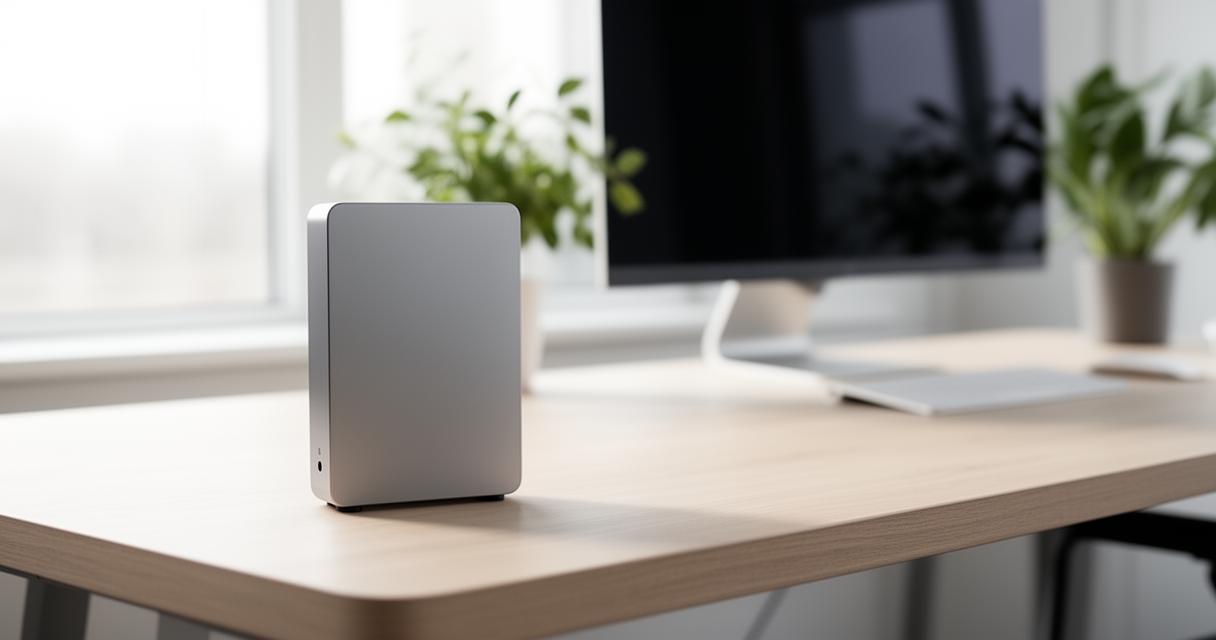
The landscape of external storage has evolved dramatically over recent years, yet 3.5-inch external hard drives continue to hold a significant place in the market. As consumers and professionals alike seek reliable solutions for backing up vast amounts of data, the question arises: how do these traditional desktop drives measure up when placed alongside the increasingly popular solid-state alternatives? With advancements in portable storage technology and the rise of external SSDs like the Crucial X10 and ADATA Elite SE880, understanding the strengths and limitations of larger format drives has never been more critical. This exploration delves into the real-world performance, durability, and value proposition of 3.5-inch external hard drives, offering insights for those navigating the complex terrain of data storage solutions in 2026.
Comprehensive reviews of top-rated 3.5-inch external hard drives
When evaluating the best 3.5-inch external hard drives, several models stand out for their combination of capacity, reliability, and performance. While the market has seen a shift towards compact SSDs such as the LaCie Rugged SSD Pro and the WD Black D50 Game Dock, traditional desktop-sized drives remain a staple for users requiring massive storage at a fraction of the cost. These larger units typically offer capacities ranging from 1TB to 8TB or even higher, making them ideal for extensive media libraries, comprehensive system backups, and archival purposes. The SanDisk Desk Drive, for instance, caters to users needing large desktop-styled storage with capacities up to 8TB, providing a bridge between traditional spinning disk technology and modern design sensibilities.
Performance analysis of leading desktop external storage solutions
Performance in 3.5-inch external hard drives is measured not only by raw transfer speeds but also by consistency and reliability over prolonged use. Although these drives cannot match the blistering speeds of external SSDs, they deliver respectable performance for sequential read and write operations, particularly when dealing with large files such as video projects or database backups. The connection interface plays a crucial role here, with USB 3.0 and USB 3.1 connections being the standard, while some premium models now offer Thunderbolt connectivity similar to devices like the WD Black D50 Game Dock. For creative professionals working with ProRes 4K video or other high-resolution formats, the sustained throughput of a quality 3.5-inch drive can prove more than adequate, especially when paired with robust caching mechanisms. Despite the emergence of portable storage options like the Synology BeeDrive, which offers automatic backups and file syncing capabilities, desktop hard drives maintain their edge in sheer performance consistency for bulk data operations.
Capacity-to-Price Ratio: Best Value 3.5-Inch Hard Drives on the Market
One of the most compelling arguments for choosing a 3.5-inch external hard drive over an SSD is the remarkable capacity-to-price ratio these devices offer. While a budget option like the ADATA Elite SE880 might provide excellent value in the SSD category, maxing out at 1TB, desktop hard drives routinely deliver multiple terabytes for a comparable or lower cost. This economic advantage becomes even more pronounced as capacity requirements increase. For home and office environments where portability is less critical than sheer storage volume, these drives present an unbeatable proposition. The cost savings allow users to implement redundant backup strategies, maintaining multiple copies of critical data without breaking the budget. This aspect is particularly important for small businesses, content creators, and archival projects where data security and long-term retention outweigh the need for ultra-fast access speeds. Even considering the five-year warranty offered by premium products like the LaCie Rugged SSD Pro, the initial investment difference remains substantial enough to influence purchasing decisions for budget-conscious consumers.
Durability testing: traditional hard drives versus solid-state drives
Durability represents one of the most significant differentiators between traditional 3.5-inch hard drives and their solid-state counterparts. The fundamental architectural differences between spinning platters and flash memory create distinct vulnerability profiles that users must consider based on their specific usage patterns and environmental conditions.
Shock resistance and physical robustness comparison
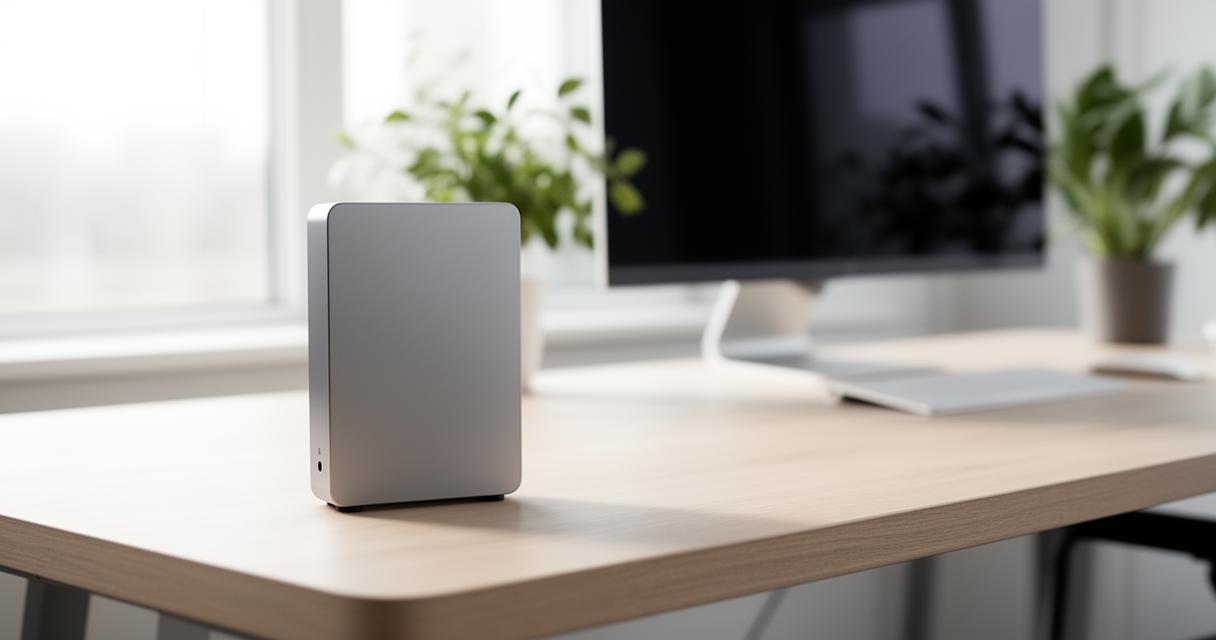
Solid-state drives have earned their reputation for superior shock resistance due to the absence of moving mechanical components. Devices like the LaCie Rugged SSD Pro exemplify this advantage with their rugged design specifically engineered to withstand drops, vibrations, and harsh conditions that would likely devastate a traditional hard drive. The ADATA Elite SE880, despite being compact and lightweight, shares this inherent resilience, making it suitable for mobile professionals and fieldwork scenarios. In contrast, 3.5-inch external hard drives contain delicate read-write heads that float mere nanometres above rapidly spinning platters. Even minor impacts during operation can result in catastrophic head crashes and permanent data loss. This vulnerability necessitates careful handling and stable mounting, particularly for drives used in professional media storage applications where the device might remain powered on for extended periods. The Apricorn Aegis NVX, while offering maximum data security through AES-XTS encryption, still benefits from SSD technology in terms of physical durability. For users prioritising protection against accidental damage, the choice between formats becomes clear, though stationary deployment of 3.5-inch drives in controlled environments significantly mitigates this disadvantage.
Longevity and Data Retention: Which Technology Stands the Test of Time?
When examining longevity and data retention, the comparison becomes more nuanced than simple mechanical versus solid-state distinctions. Traditional hard drives, when properly maintained in stable environments, can reliably store data for many years, with some archival-grade models designed specifically for long-term retention. However, they remain susceptible to mechanical wear, with bearings and motors gradually degrading over time. SSDs face different challenges related to write endurance and charge retention, though modern drives like the Crucial X10 with multiple capacity options from 1TB to 8TB incorporate sophisticated wear-levelling algorithms that extend their operational lifespan considerably. The Seagate Ultra Compact SSD offers AES encryption alongside reasonable durability, though performance benchmarks reveal some limitations compared to premium alternatives. Crucially, SSD technology demonstrates a lower risk of data corruption during operation, as there are no mechanical components to misalign or fail unexpectedly. This reliability advantage proves particularly valuable for automatic backups and continuous operation scenarios. The Synology BeeDrive, despite having subpar performance benchmarks and lacking encryption, benefits from this fundamental SSD advantage. For archival purposes where drives might sit unpowered for extended periods, traditional hard drives may actually retain data more reliably than SSDs, which can experience charge leakage over years of storage. This consideration remains important for true cold storage applications in home and office environments.
Real-world usage scenarios: when 3.5-inch external drives excel
Despite the technological advantages of SSDs, specific use cases continue to favour traditional 3.5-inch external hard drives, particularly where capacity requirements dominate performance considerations and physical mobility is not a primary concern.
Professional media storage and large-scale backup applications
For creative professionals working with extensive video libraries, raw photography archives, and uncompressed audio projects, the massive capacity of 3.5-inch drives remains unmatched at accessible price points. While the Lexar Professional Go Portable SSD excels for iPhone users creating ProRes 4K videos on location, the subsequent long-term storage of completed projects benefits from the economical terabyte counts offered by desktop drives. Studios and production houses routinely accumulate dozens of terabytes of footage, and maintaining this material on SSDs would prove prohibitively expensive. The SanDisk Desk Drive addresses this market segment directly, providing desktop storage solutions with capacities reaching 8TB in a form factor designed for permanent installation rather than portability. These drives serve as cost-effective archival solutions, allowing organisations to maintain comprehensive project histories without recurring cloud storage fees. Mac users might gravitate towards the LaCie Rugged SSD Pro for active projects due to its high speeds and extreme ruggedness, but completed work naturally migrates to more economical storage tiers. Gaming storage presents another interesting consideration, as the WD Black D50 Game Dock combines SSD speed for active titles with the potential for supplementary hard drive storage for less frequently accessed games, though it requires Thunderbolt 3 or 4 connectivity.
Cost-Effective Archival Solutions for Home and Office Environments
Home users and small office setups benefit enormously from the affordability and capacity of 3.5-inch external drives when implementing comprehensive backup strategies. While devices like the Synology BeeDrive offer automatic backups with file syncing capabilities, their limited capacity and higher cost per terabyte make them less suitable for household-wide backup solutions encompassing multiple computers, extensive photo libraries, and years of personal documents. Traditional desktop drives excel in these scenarios, providing ample space for time-machine style backups that maintain multiple historical versions of files. The connection interface, typically USB 3.0 or better, delivers sufficient speed for overnight backup operations that run automatically while systems are idle. Data security remains paramount, and while the Apricorn Aegis NVX provides exceptional protection through hardware encryption for sensitive materials, standard 3.5-inch drives combined with software encryption tools offer reasonable security for most personal data at considerably lower cost. The durability concerns associated with mechanical drives become less significant in home and office environments where devices remain stationary on desks or shelves, protected from the physical stresses that make rugged design essential for portable units. Budget-conscious consumers can implement redundant backup systems using multiple inexpensive high-capacity drives, providing protection against individual drive failure without the expense of RAID arrays or premium SSD solutions. This approach aligns with best practices for data corruption prevention while remaining accessible to non-technical users.